
It has been almost six months since I started the process of joining the Catholic Church. The process is long and much more complicated than becoming a member in most Protestant churches. Accepting the long process of discernment is a bit of a paradigm shift in our instant-gratification culture, but I’ve enjoyed the slow commitment to learning.
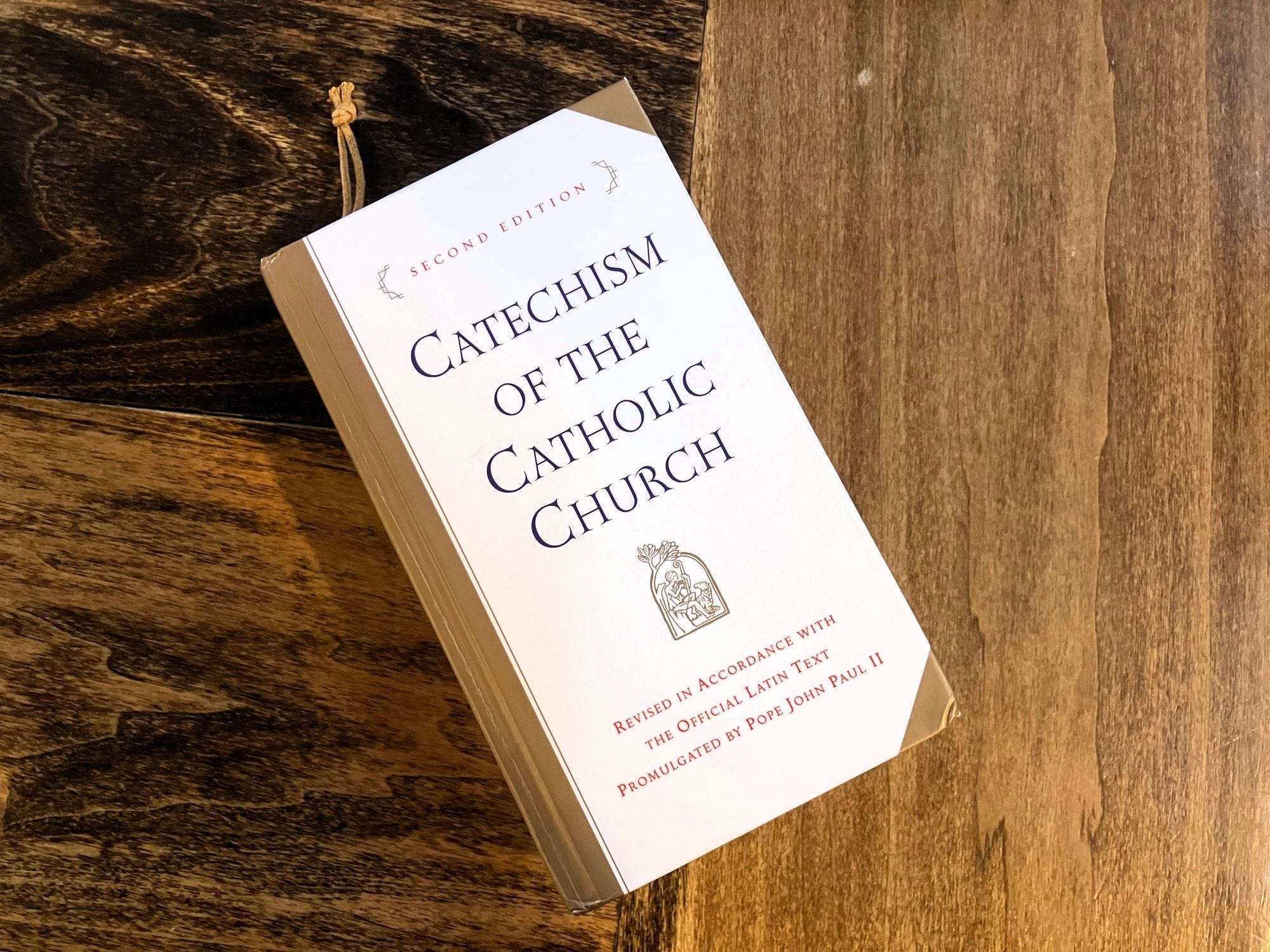
As a part of the process, many in my family are reading the entirety of the Catechism of the Catholic Church. This isn’t required of new Catholics — though it is recommended. Our Parish gifted us a copy of the Catechism along with the materials required by OCIA — the Order of Christian Initiation for Adults. The OCIA materials are a more summarized overview of Catholic teaching. Many in my family, however, wanted to go deeper in understanding what it is we are submitting to by becoming Catholic.
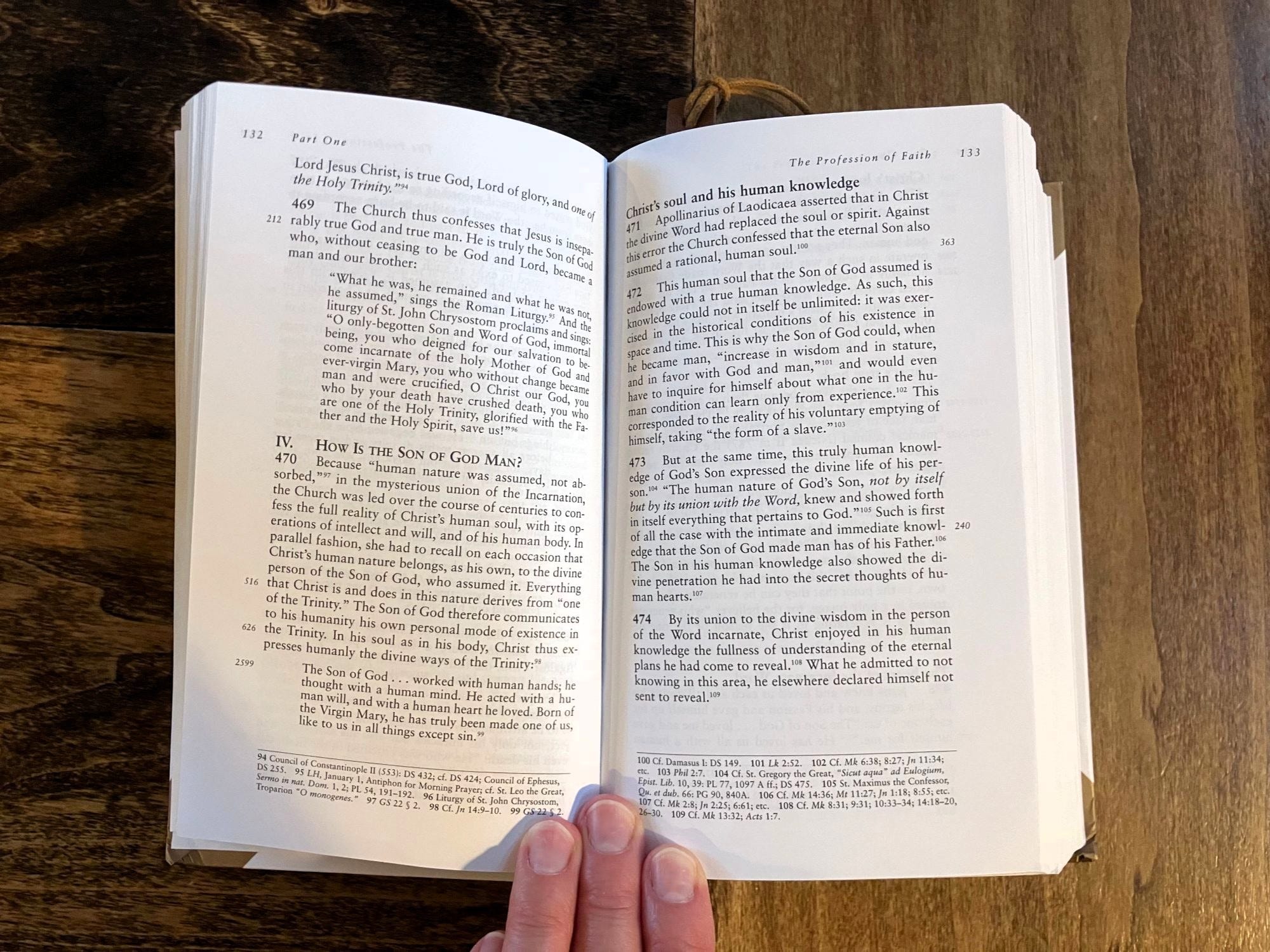
I’m not sure what I expected, but more than halfway through the Catechism, I am in awe. The first portion uses the Apostles Creed as a framework for a deep dive into foundational Christian beliefs. I have been impressed with the heavy footnoting, as statements are linked back to scripture, church documents, and so many Church Fathers, Doctors, and Saints. It doesn’t feel like I’m reading a book by an author or committee. It really does seem like reading the spiritual witness of millennia, the consensus of Christian truth revealed to and through God’s people.
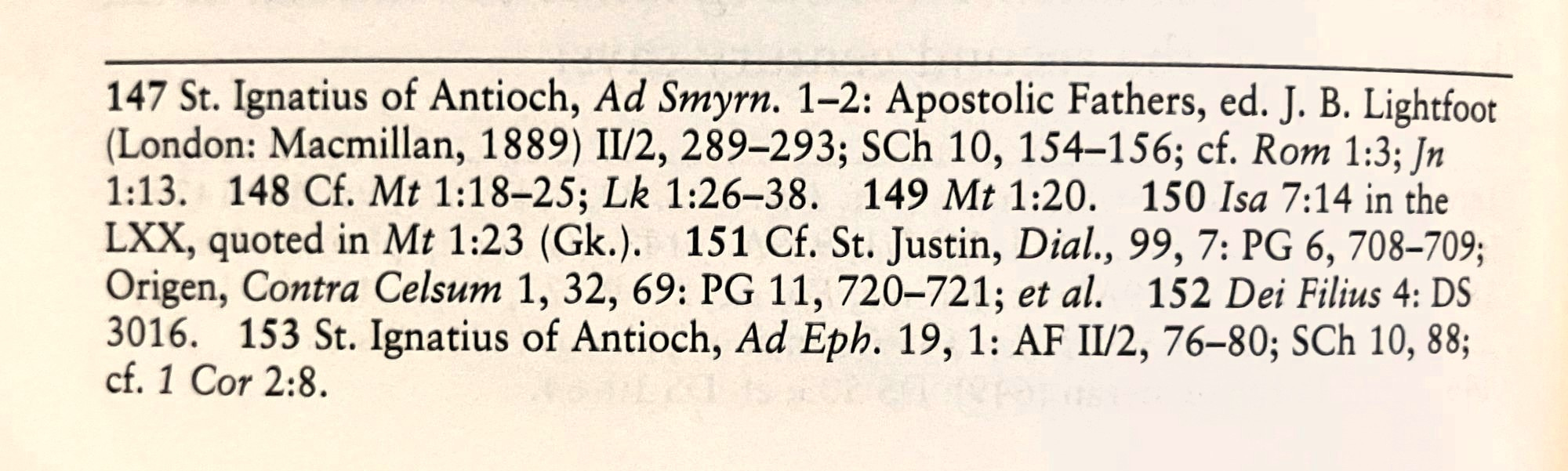
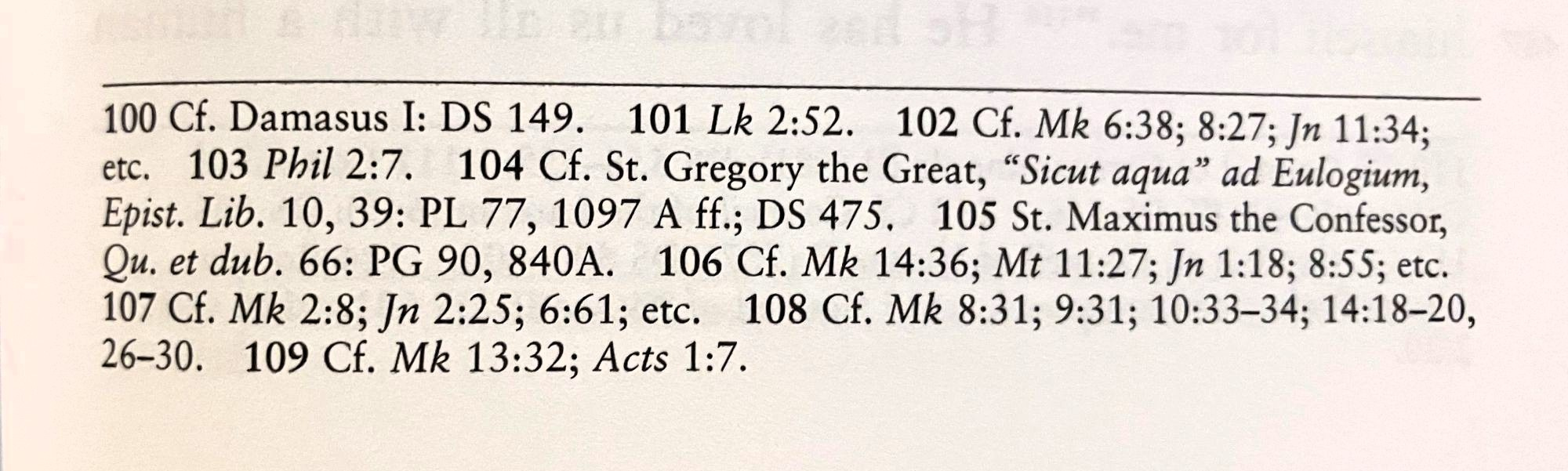
As a lifelong protestant, I fully expected to find the Catechism challenging — I thought there would be positions I struggled to believe and accept. Perhaps that will still happen. So far, though, I have been impressed by how reasoned and balanced each position is. The catechism is clear and balanced on topics that Protestants have long debated and divided over — the timing and efficacy of baptism, free will and predestination, the baptism of the Holy Spirit, and so much more. Each section has been thoughtful and concise, covering a huge range of topics — from the trinity to the order of the liturgy.
As I have read, I have wished repeatedly that I had been introduced to it years ago. Of course, I have been aware of it — but it sounded so much more daunting than it actually is. Far from the overwhelming tome I expected, the Catechism is an accessible and systematic explanation of Catholicism. It is an incredible resource, for those who are considering Catholicism as well as those who just want to know what Catholics believe. Since learning more about Catholicism myself, I have realized how often Protestants misunderstand and mischaracterize Catholic teaching. The Catechism makes clear many of these understandings.
What I have loved best about the Catechism is how clearly it is aimed at love. The overt Christianity of the Catechism is truly such a gift. The more I have read, the more I have been invited into deeper love of God and my fellow man. I still have almost half of the Catechism still to read, but I already know I will read it again and again. In closing, I give you the first paragraph of the Catechism. Enjoy.
I. The life of man - to know and love God
1 God, infinitely perfect and blessed in himself, in a plan of sheer goodness freely created man to make him share in his own blessed life. For this reason, at every time and in every place, God draws close to man. He calls man to seek him, to know him, to love him with all his strength. He calls together all men, scattered and divided by sin, into the unity of his family, the Church. To accomplish this, when the fullness of time had come, God sent his Son as Redeemer and Saviour. In his Son and through him, he invites men to become, in the Holy Spirit, his adopted children and thus heirs of his blessed life.